
What is Sustainable Landscaping?
We have the ambition to directly impact the lives and wellbeing of the people in our communities and create meaningful change in the spaces where we interact. That's what fuels our passion for community resilience and sustainable landscape solutions.
But what does "sustainable landscaping" actually mean?
Some people picture overgrown lawns. Others imagine expensive products or complicated maintenance routines. In reality, sustainable landscaping is much simpler. It's about creating outdoor spaces that work better—for homeowners, the environment, and the community.
To help explain it, we're answering a few of the questions we hear most often.
1. What is sustainable landscaping?
Sustainable landscaping is the practice of designing, building, and maintaining outdoor spaces that use resources wisely, work with natural systems, and continue providing value over the long term. At Belleview Landscapes, sustainability shows up in the decisions we make every day. We design with stormwater management in mind. We prioritize native plants where appropriate. We use battery-powered equipment and organic products. We look for ways to reuse materials already on site. We approach things holistically. And we continuously look for better solutions through curiosity and innovation.
2. Why should I care?
What if we told you that you could lower your maintenance costs? Yeah. For real.
Here are some quick examples:
An alternative lawn can reduce, and in some cases eliminate, the cost of fertilizer, weed control, and water use.
A thoughtfully designed garden with a strong mix of native plants (we aim for 70% or more) often requires less long-term maintenance than people expect.
Proper drainage solutions can literally net you a tax credit in some regions
Trees are investments and when planted in the right place, can reduce heating and cooling costs.
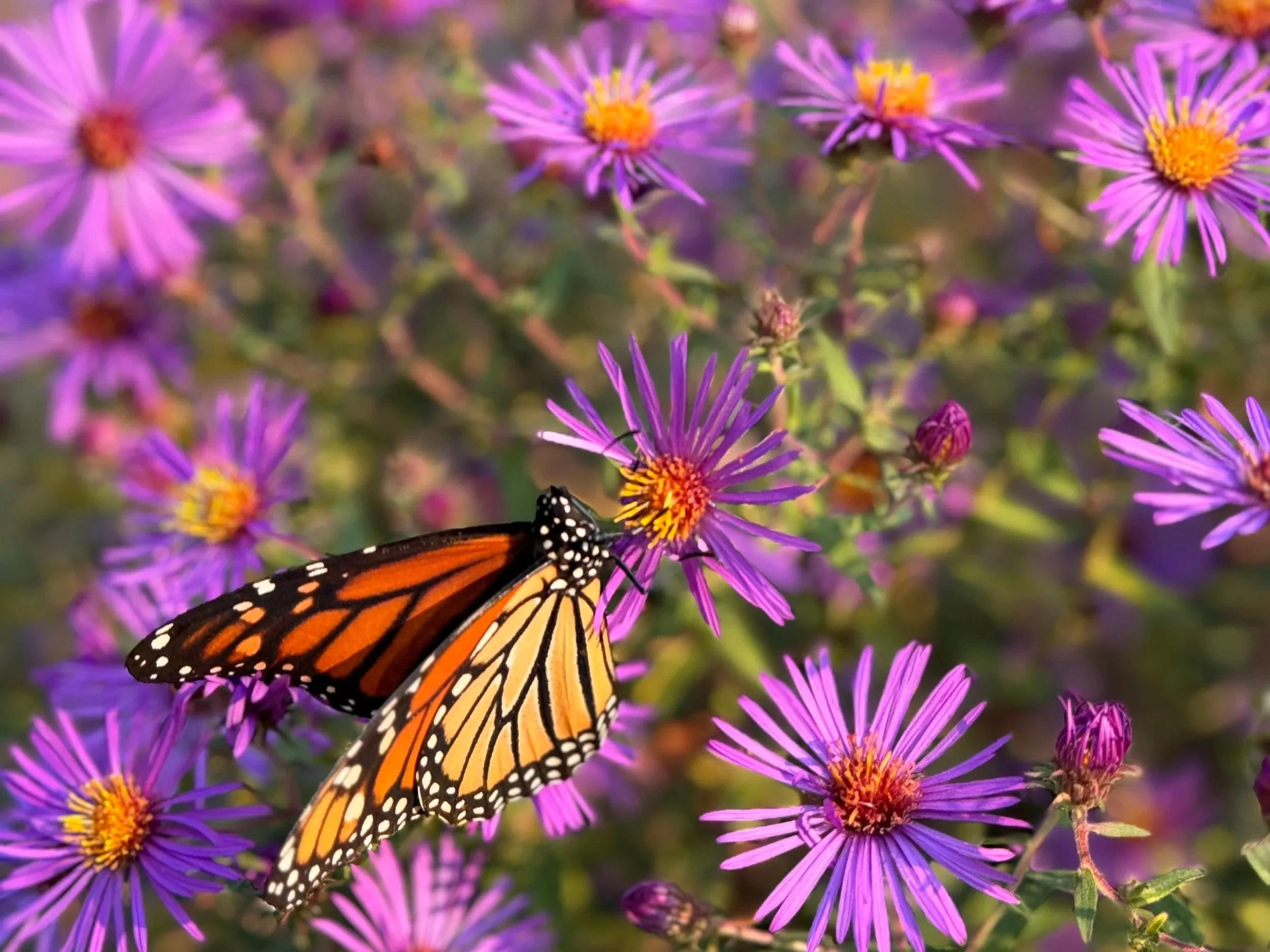
I could go on and on. Truly. In general, a thoughtfully designed and maintained sustainable landscape is more resilient. It can hold up to our rapidly changing weather patterns, drought, heat, and heavy rain. And if we could tug on some heartstrings for a moment - you can create habitat and support pollinators. Pollinators aren't just nice to have. They're essential to the systems that produce much of the food we eat and the landscapes we enjoy.
“A garden. It looks like a garden”
3. What does sustainable landscaping look like?
Sustainable landscapes aren't just functional. They're places where kids explore, neighbours connect, and families spend more time outdoors. I had someone ask me once, while speaking at a seminar for sustainability “What does a rain garden look like?” I paused for a moment. A garden. It looks like a garden. Further, a permeable patio still looks like a patio. A stormwater infiltration gallery in a lawn still looks like a lawn. So a sustainable landscape doesn’t need to look any different. And they can still serve an aesthetic function and be used like a traditional landscape. Take this patio for instance…
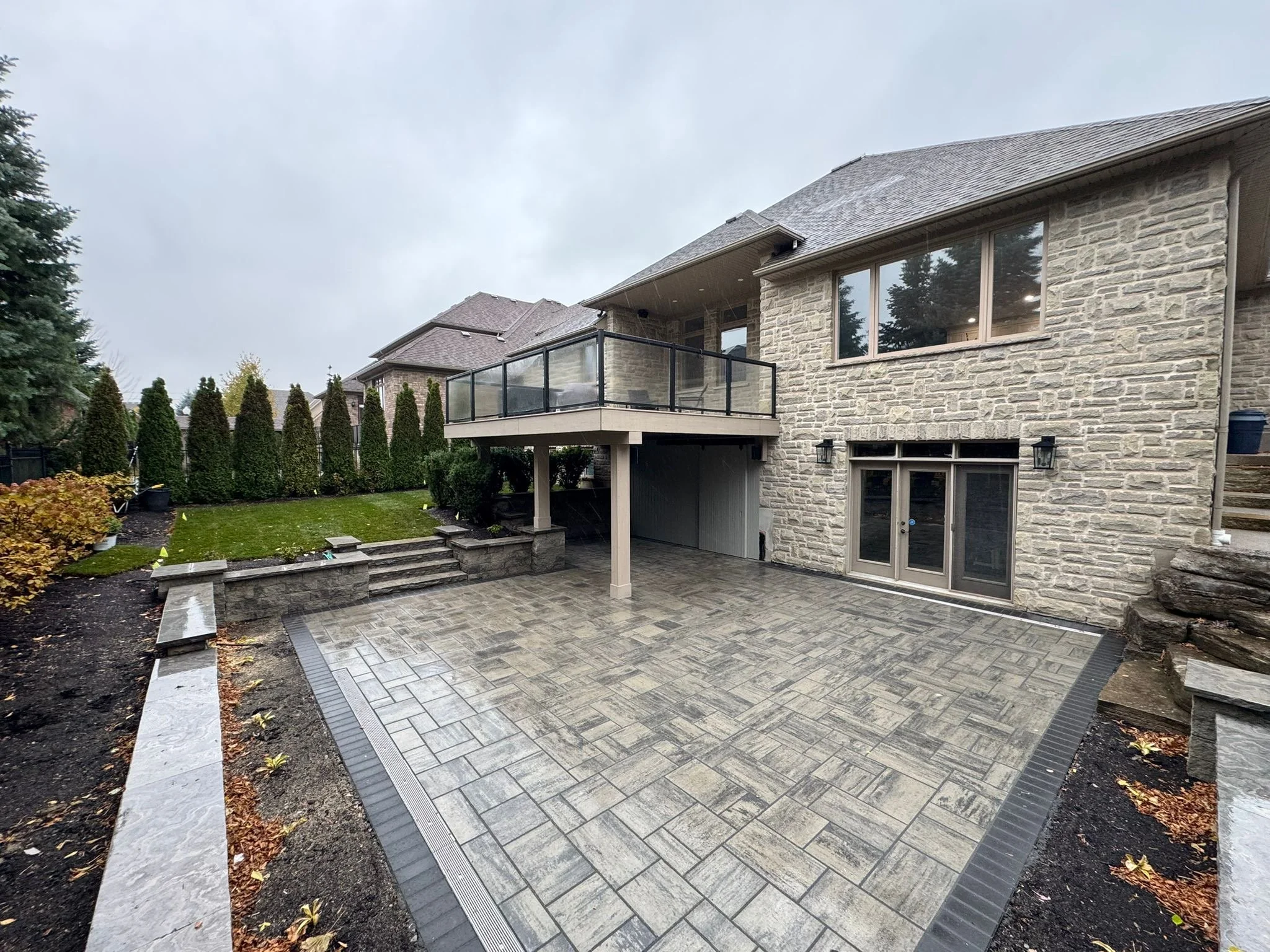
Backyard Patio by Belleview Landscapes using Techo-bloc pavers in a permeable application
…The entire space is permeable and free draining. And half of the entire roof, all the garden walls, and the backyard property lines drain into this space. But you can still set up your lounge chairs, dining set, and even bring in a hot tub.
Another example is this space…
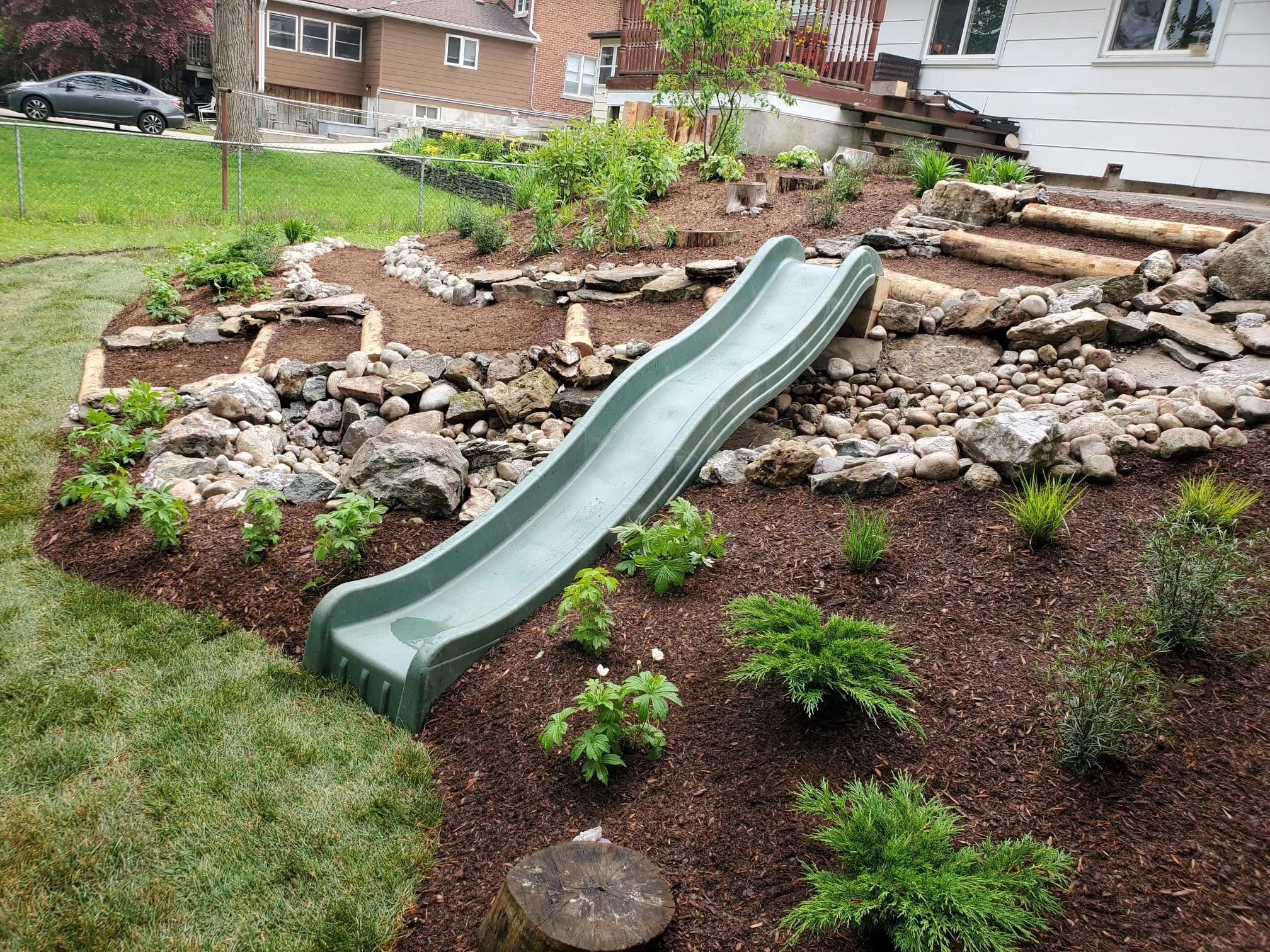
Backyard Exploration by Belleview Landscapes
…where we created an explorable space for the client’s children. The dry river bed captures the rain water from the house. The material was salvaged from existing rocks on site. The logs were reclaimed. The plants are native. And there are spots for insects to make habitat.
“It’s about creating outdoor spaces that bring people together, strengthen neighbourhoods, and continue delivering value for years to come. That’s what “Creating Community. Outdoor.” means to us.”
4. How does it benefit the community?
At Belleview Landscapes, we speak a lot about community resilience. And we say that we seek to improve the lives and wellbeing of those who live in our communities. Our projects support that mission.
We mentioned stormwater and drainage earlier in this post. Historically, we've been taught to move water off our properties as quickly as possible. The challenge is that this approach often contributes to larger watershed issues while failing to solve flooding problems altogether. Using Fusion Landscape principles, we design landscapes where rainwater becomes a resource rather than a burden. Now, how about that?
Community resilience isn't only about managing water better. Or supporting habitat. It's also about creating places where people can thrive. So then there is the biophilic connection. Human beings are biologically connected to nature and we need it more than we realize. Studies have shown a 30% drop in request for pain medication from hospital patients who are exposed to nature (Roger Ulrich, 1984). Nature has a remarkable ability to calm our nervous systems and support our physical and mental wellbeing. So creating healthy, sustainable landscapes is an integral part of healthy sustainable communities.
5. Is sustainable landscaping more expensive?
Maybe it was. But not anymore. The initial investment can be a little higher, but it is often very similar. More importantly, sustainable landscapes are designed to perform for decades. Lower inputs, healthier plants, better water management, and longer-lasting materials often make them the better investment over time. For instance, when installing a permeable paving system for a patio, the material costs are higher but less labour is used on putting it together. So there is a trade off. Belleview Landscapes focuses on providing sustainable landscape solutions that fit your budget. And the long term gains make the sustainable option the best investment choice.
At Belleview Landscapes, we believe sustainable landscaping isn't just about protecting the environment. It's about creating outdoor spaces that bring people together, strengthen neighbourhoods, and continue delivering value for years to come. That's what "Creating Community. Outdoor." means to us.
Written by
Adam C.E. Braun CLHT, FLP
Founder, Owner, Explorer
Belleview Landscapes
If you are curious, as much as we are, and you want to learn more about Sustainable Landscaping, call us at 226-789-3938. We’ll talk for hours.